Java resource management
Cut Java memory waste without OOM kills.
LevelFour finds the JVMs on your clusters and reads each heap from the pod spec or, with the optional JVM reader, from the running JVM: the heap it may grow to, its live set and the memory it holds outside the heap. Then it sizes each Java pod to fit and ships the change, in place or as a pull request.
JVM-aware by design
A JVM reserves memory up front and can grow its heap to -Xmx at any moment. Size a Java pod from last week's usage and the next busy hour ends in an OOM kill. LevelFour sizes every Java container from its heap, so no memory cut goes below what the JVM can claim: the heap maximum, plus 256 MiB and a tenth of the heap for everything outside it.
See inside every JVM
Turn on the optional JVM reader and each Java container shows its heap maximum, an upper bound on its live set, committed heap, memory outside the heap, time in GC pauses and JDK, day by day, next to its requests and limits. LevelFour also flags what wastes memory, such as a heap far above its live set or one left at the JVM's default 25% on a large limit.
OOM kills fixed in place
After two OOM kills of a container within an hour, the automation gives the running pod up to 25% more memory, with no restart. The chart marks the raise, and the days after show whether it held.
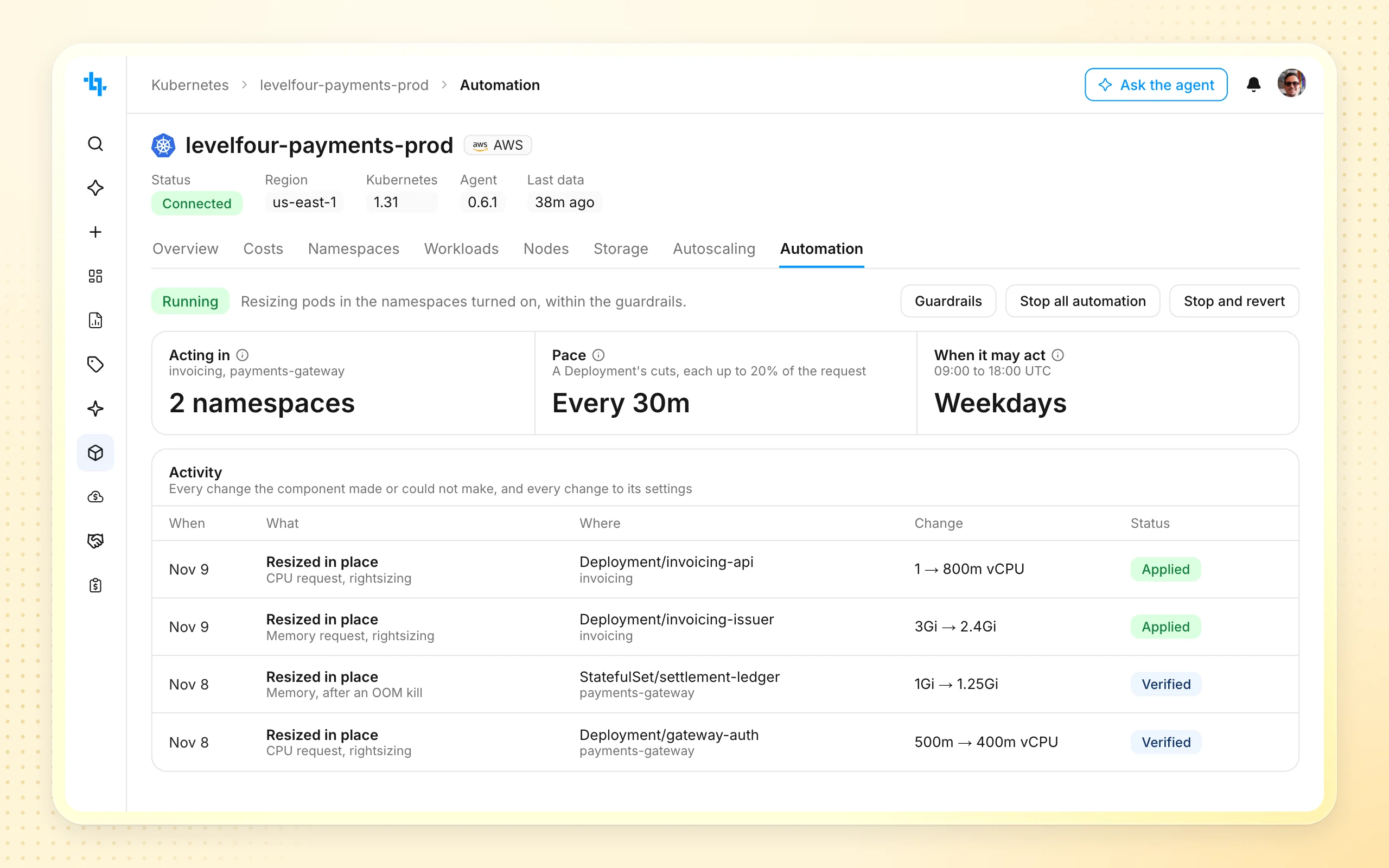
Rightsized in place, one step at a time
Where you turn automation on, LevelFour cuts a request by at most 20% a step on the running pods and stops at the memory floor. It never lowers a JVM's limits, and a pod that is OOM killed, evicted, restarts twice in an hour or stops being ready goes back on its own.
How the automation works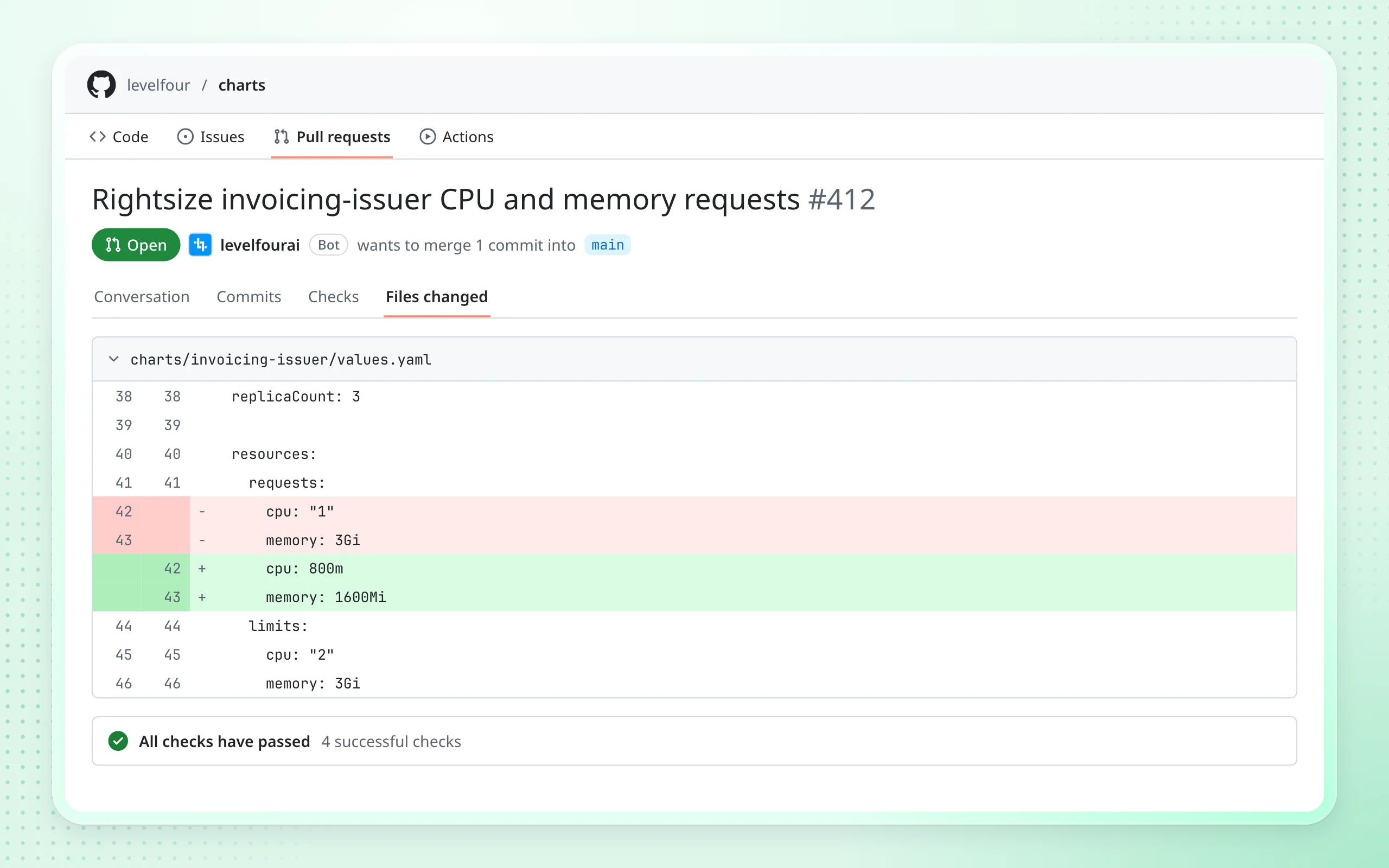
Or as a pull request
Each change can ship as a pull request on the repository that deploys the workload, with the HPA or KEDA target moved in the same diff. Your pipeline applies it, and a week later LevelFour measures the saving on your bill.
How LevelFour sizes the JVM
The docs cover the memory floor, the CPU rules for older JDKs, what the agent reads from each container and the automation's guardrails.
Read the docs