Kubernetes
Install it once. Your clusters stay rightsized.
LevelFour reads what each pod costs from your own bill and rightsizes it, in place or by pull request, inside limits you set once. It runs on EKS, GKE, AKS and any cluster on Kubernetes 1.23 or later, and measures each saving on your bill.
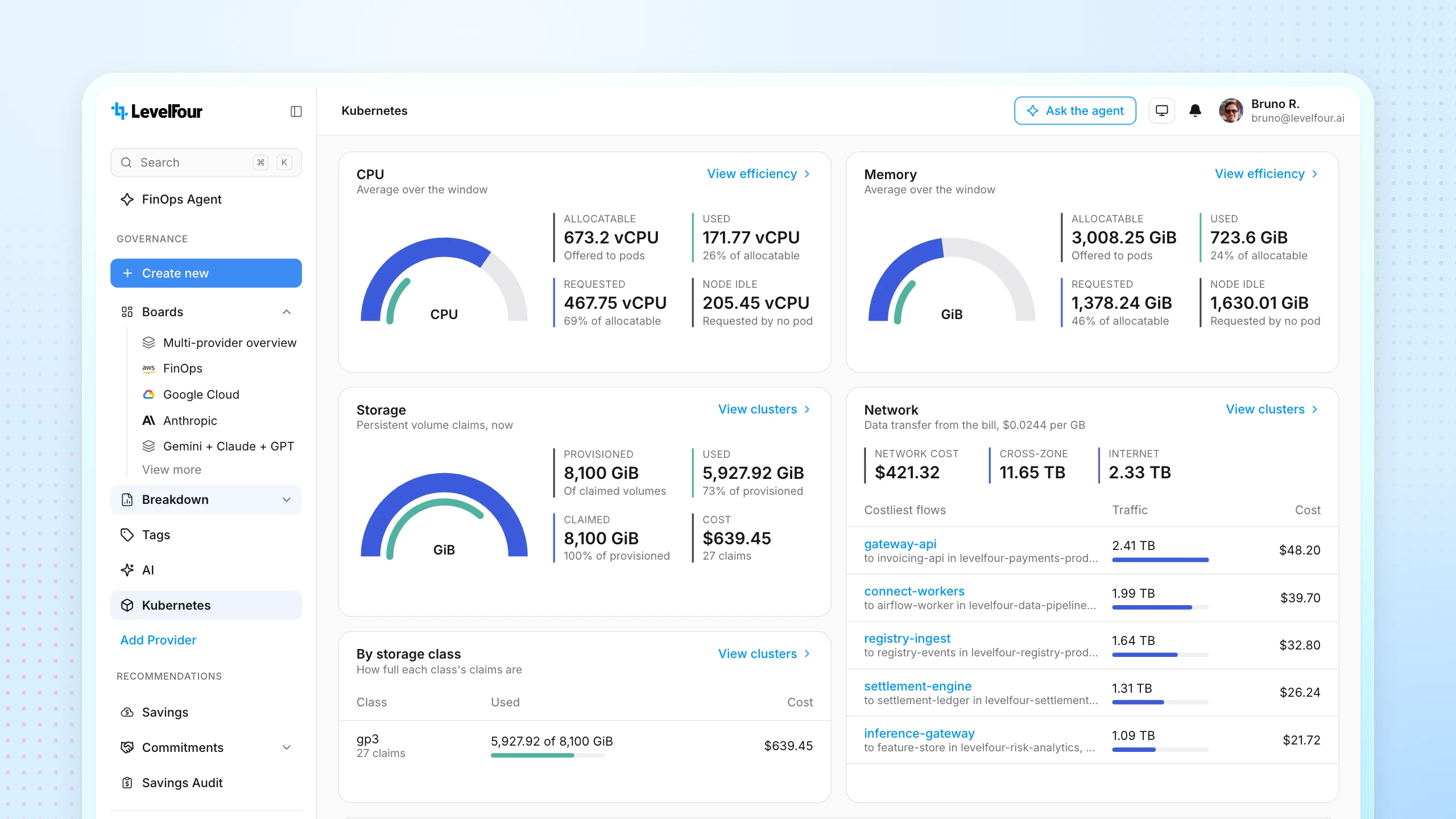
Kubernetes savings that keep shipping
Teams set requests at deploy time and move on, and your cloud bill charges for every core those requests reserve. The LevelFour agent reports what each container uses, and LevelFour turns the gap into savings that ship in place with the automation, or as pull requests your pipeline applies.
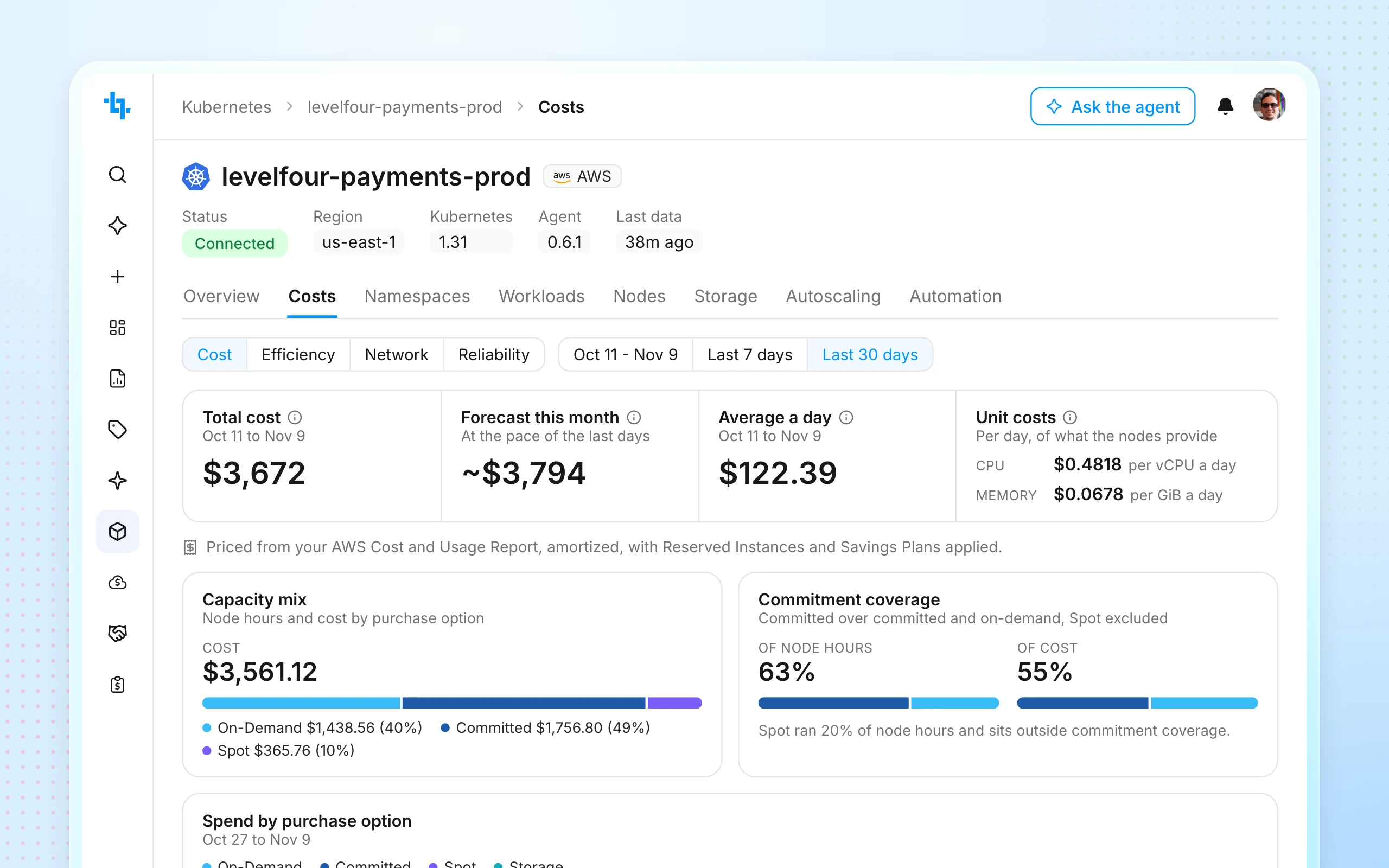
Each pod's cost, from your own bill
LevelFour reads each node's cost from your Cost and Usage Report or billing export, with your commitments applied, and splits it across the containers that ran on it. You see cost per cluster, namespace, workload and node, the forecast for the month, and what a vCPU or a GiB costs you a day.
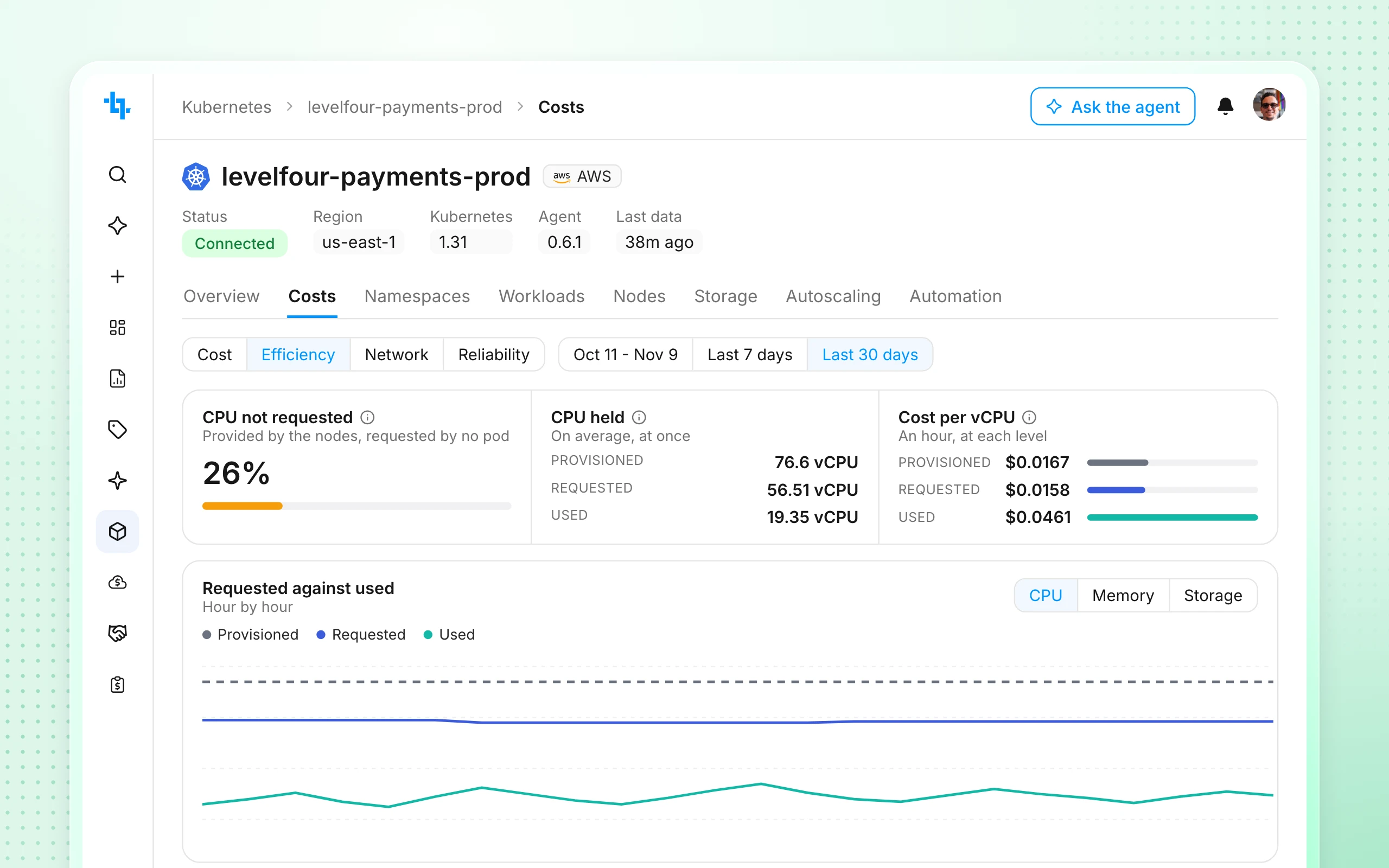
What you reserve next to what you use
For CPU, memory and storage, LevelFour shows what the nodes provide, what pods request and what they use, hour by hour, with what each level costs. Recommendations size each request from 14 days of usage, and LevelFour works out the cheapest set of nodes each NodePool's pods fit on.
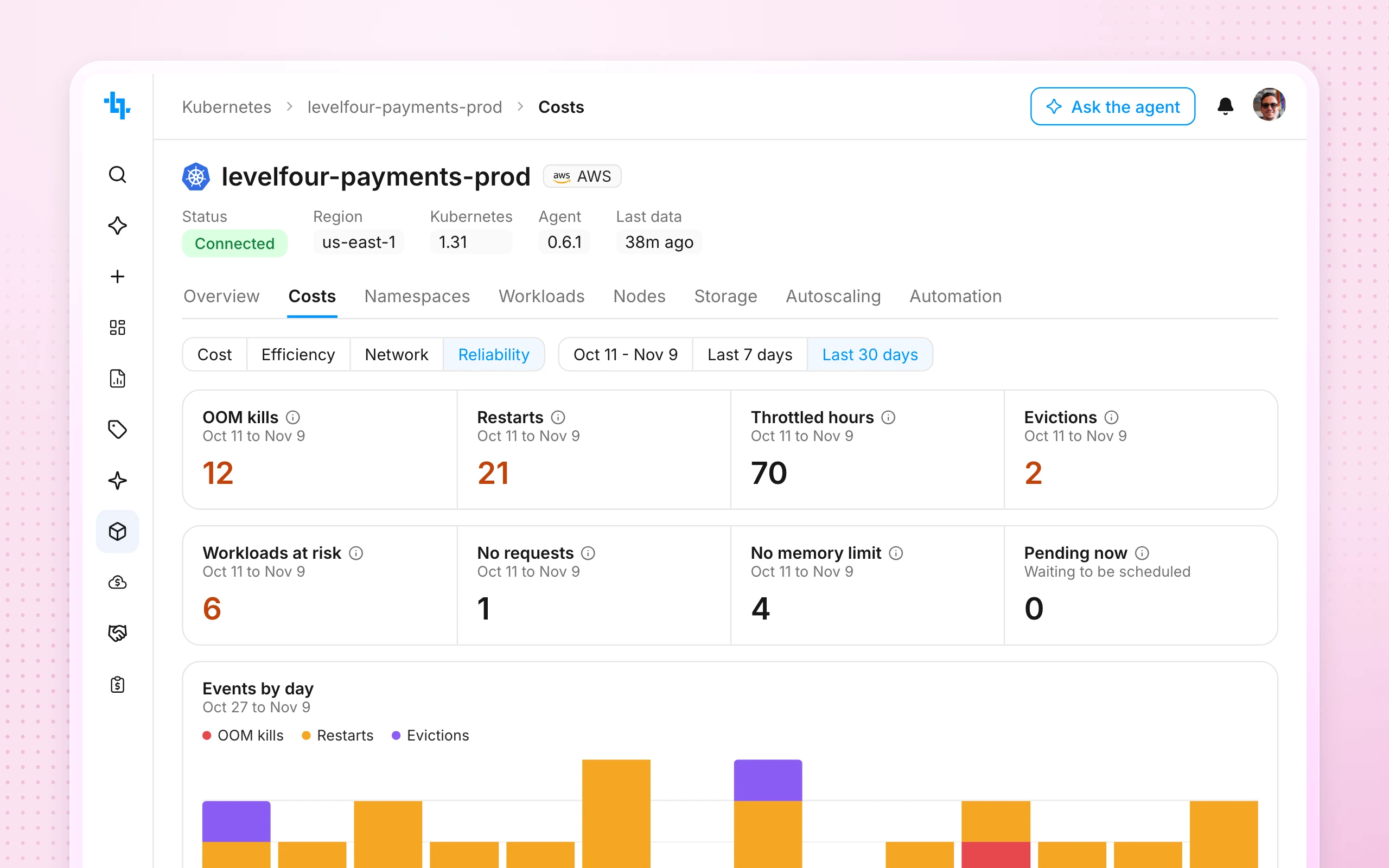
Reliability beside the bill
OOM kills, restarts, CPU throttling and evictions sit next to cost, cluster by cluster, and the workloads at risk come first. LevelFour sizes memory from each container's peak and holds back a cut on a suspected memory leak. After OOM kills, it raises memory.
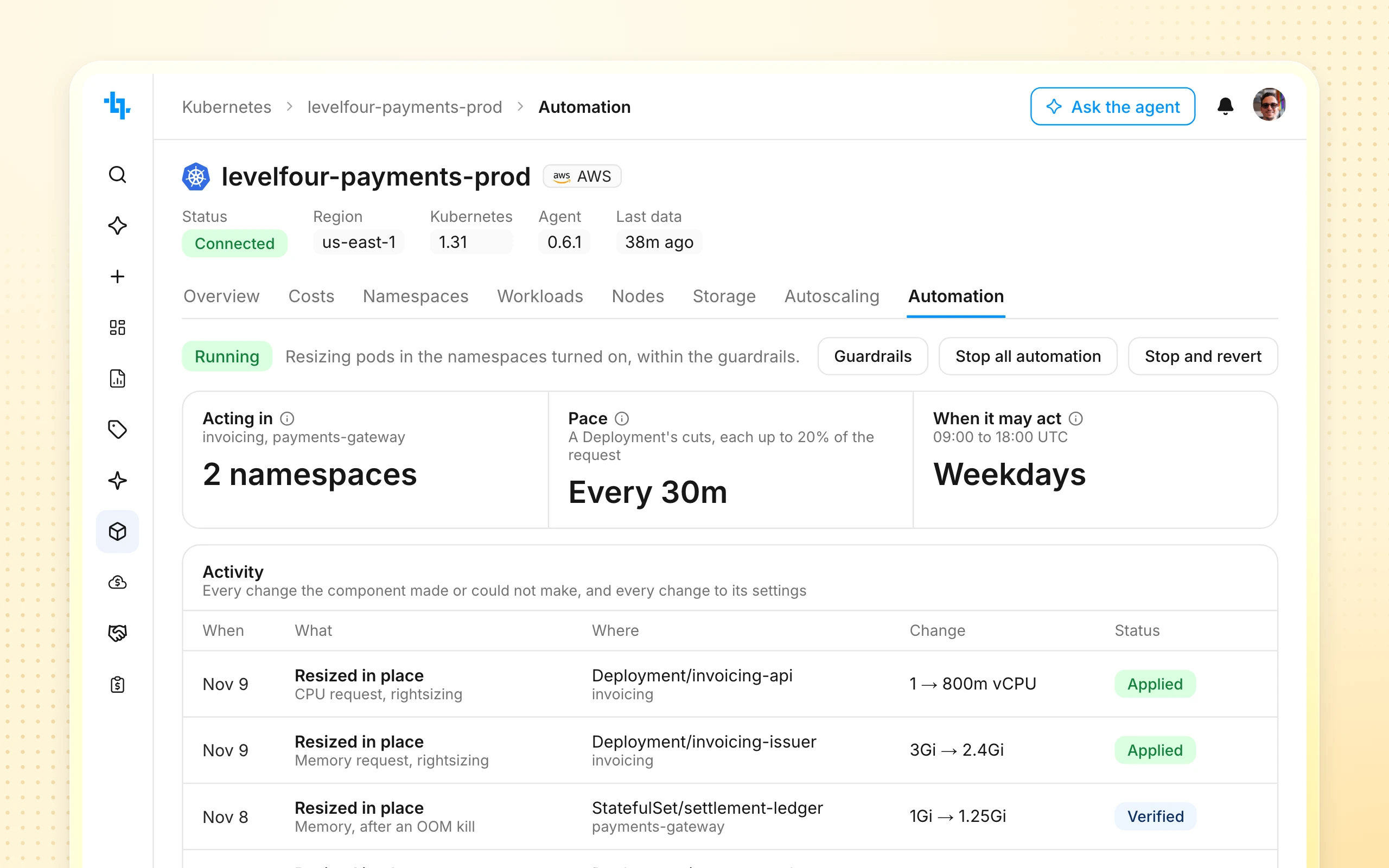
Resized in place, inside your guardrails
Turn the automation on for a namespace and it cuts oversized requests on running pods, at most 20% a step. It also fixes OOM kills and CPU throttling without a restart, and gives new pods the values it reached. Maintenance windows, minimums, maximums and a ceiling in your Helm install set how far it goes.
How the automation works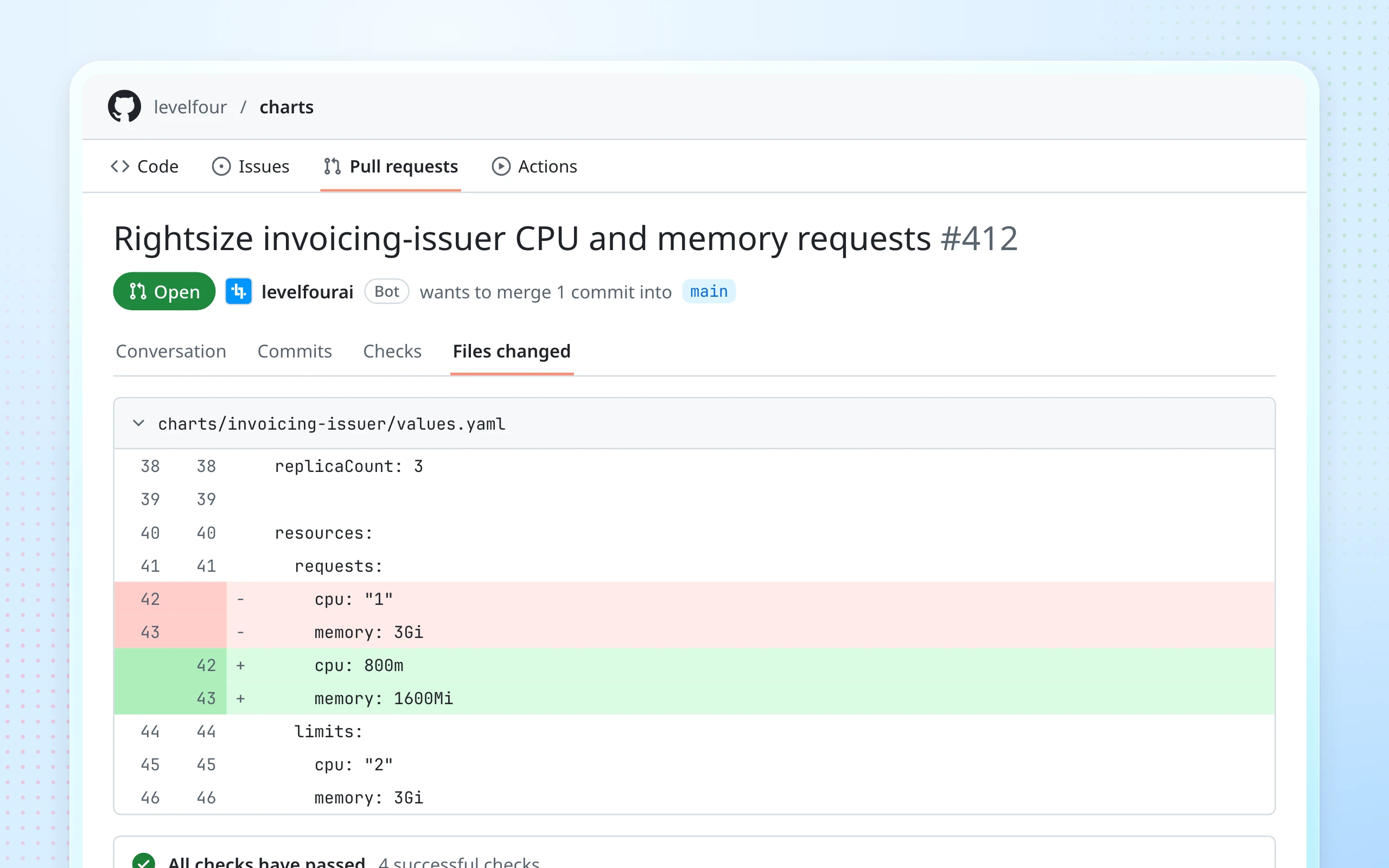
A pull request when you want one
Without the automation, each change arrives as a pull request on the repository that deploys the workload, and your pipeline applies it. NodePool and node group changes come the same way, and LevelFour merges the classes of change you allow. A week after a change holds, LevelFour measures the saving on your bill.
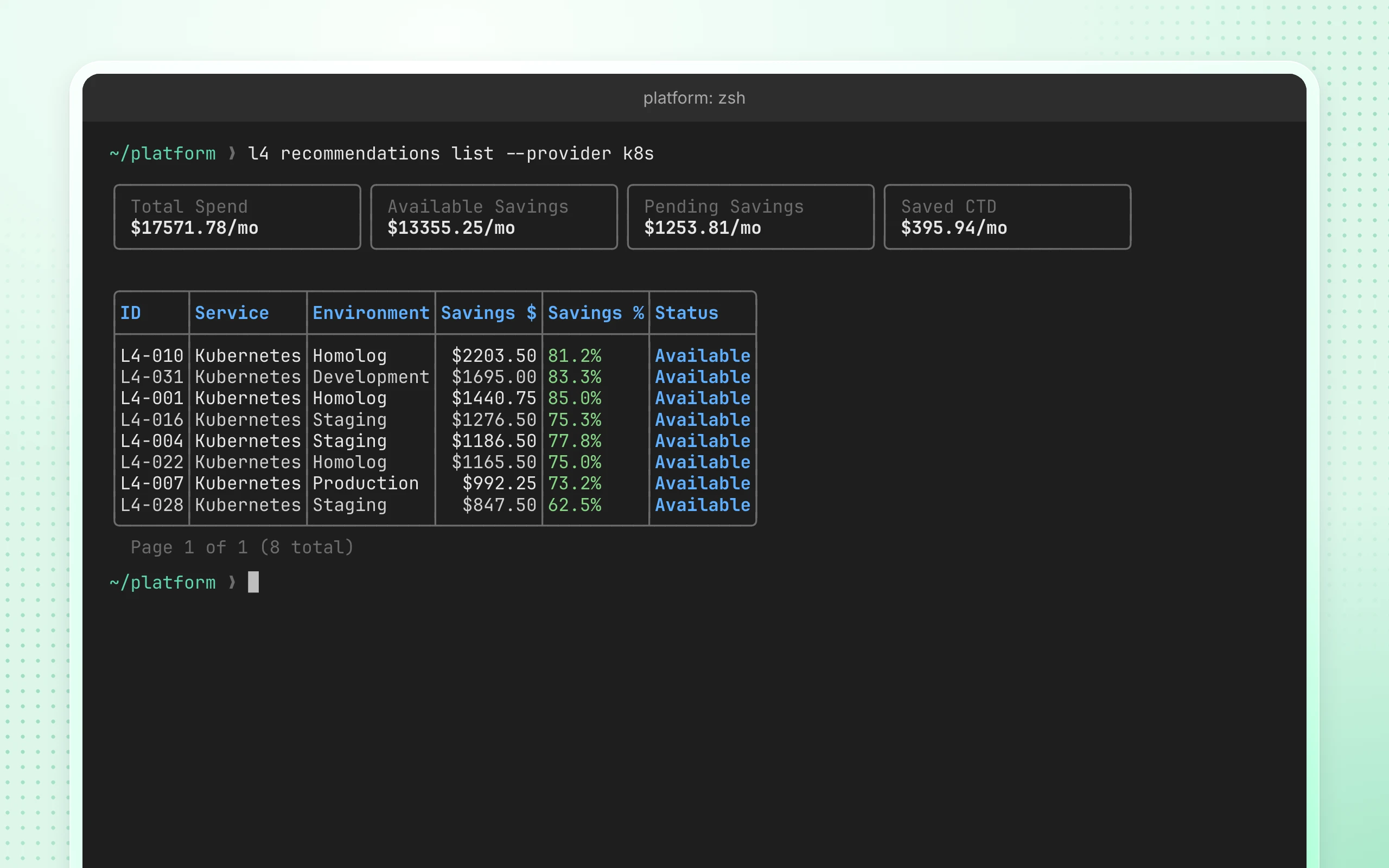
Kubernetes in your terminal and your AI agent
The l4 CLI lists Kubernetes costs and savings with --provider k8s, as tables for you or JSON for your scripts. Over the LevelFour MCP server, Claude, Cursor or any other MCP client reads the same clusters.
See the CLIKubernetes documentation
The docs cover the install with Helm or GitOps, what the agent reads, the automation, recommendations and node optimization. The API, the CLI and the SDKs read the same costs and savings.
Read the docs